In maritime trade compliance, risk doesn’t emerge overnight. It builds gradually through patterns, behaviours and signals—often visible well before enforcement action.
The recent case involving Adani Enterprises Limited (AEL),a diversified multinational company headquartered in India, makes this clear. Despite multiple indicators of elevated sanctions risk, insufficient action was taken, resulting in a $275m settlement with the US Office of Foreign Assets Control (OFAC) to settle its potential civil liability for apparent violations of OFAC sanctions on Iran.
The lesson is not just about sanctions exposure. It is about what happens when observable risk is not acted upon.
The signals regulators expect you to recognise
OFAC highlighted a familiar set of maritime risk indicators
- AIS manipulation and irregular vessel movements
- Frequent changes in ownership, flag and identity
- Illogical or uneconomic voyage patterns
- Documentation inconsistencies
Crucially, OFAC emphasised that reliance on documentation alone is not sufficient to mitigate sanctions risk. This is not new guidance, but well-documented indicators of deceptive shipping practices.
Which raises an important question:
If the signals are known—and visible—why are they still being missed?
From signals to regulatory expectation
What makes the AEL case particularly significant is not just the presence of red flags—but the expectation that they should have been acted upon.
OFAC explicitly noted that vessels involved in the activity were “routinely engaged in deceptive shipping practices,” such as AIS manipulation and irregular voyages.
In other words, regulators are no longer asking: “Was there proof of wrongdoing?”
They are asking: “Were there sufficient warning signs—and why were they not investigated?”
This is a fundamental shift: compliance is no longer about identifying confirmed risk, but recognising and acting on risk patterns early enough to prevent exposure.
A case in point: the warning history of Vina/ Neel
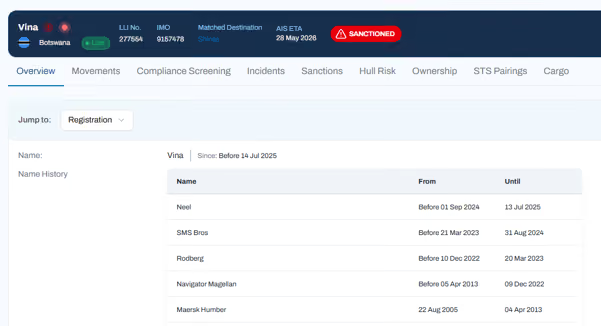
One of the vessels associated with but not directly identified, in the OFAC enforcement material is Neel (IMO 9157478) later renamed Vina on 13 July 2025, shortly after it was sanctioned on 3 July 2025.
The vessels a clear example of how risk can build visibly over time before formal designation. The warning signs were not limited to one data point or one isolated voyage. They appeared across the vessel’s identity history, AIS behaviour, voyage pattern and cargo movements.
The vessel had undergone multiple name changes since 2020 and later changed name again after designation. It also changed flag state, and is now Botswana-flagged. In isolation, a flag or name change does not prove sanctions exposure. But in the context of repeated identity changes, suspicious vessel behaviour and Iranian cargo exposure, it becomes part of a wider risk picture.
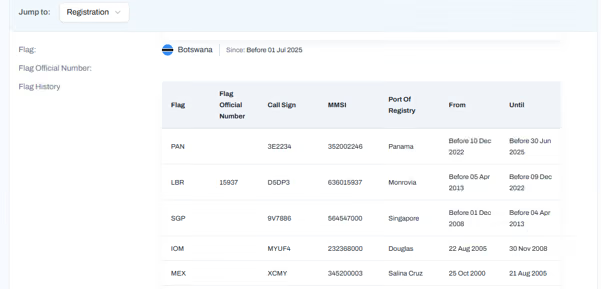
The most important evidence, however, is the connection between AIS manipulation and cargo confirmation.
From July 2024, the vessel was already showing spoofing behaviour. The AIS positions and reported callings to Khor al Zubair is particularly important because this location sits at the centre of a known LPG evasion typology: cargoes linked to Iran being presented as Iraqi-origin LPG. Lloyd’s List has reported that a significant share of LPG-related AIS activity around Khor al Zubair is likely simulated, with false or spoofed callings used to support misleading cargo-origin narratives.
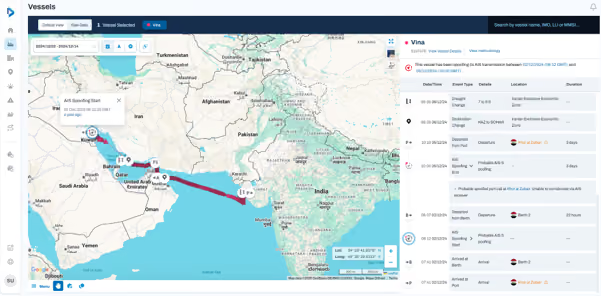
That context makes the vessel’s behaviour highly significant. The issue is not simply that the vessel had suspicious movements. Cargo data then provides the corroboration and further evidence. The vessel is associated with a series of sanctioned LPG cargo movements from Iran, including repeated movements to Mundra, the discharge port central to the Adani enforcement case. This is the key point: the spoofing signal is not standing alone. It is reinforced by confirmed cargo intelligence showing Iranian-origin LPG movements.
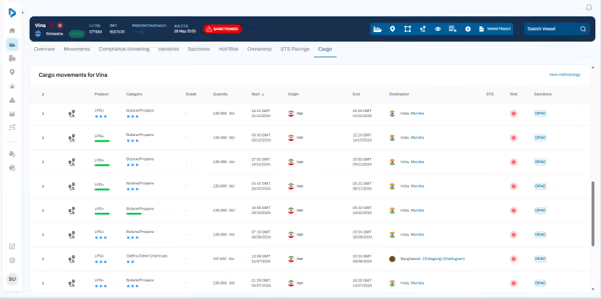
Taken together, the pattern is very difficult to dismiss:
· it showed spoofing behaviour before designation with a pattern aligns with the wider Khor al Zubair false-origin typology;
· the cargo data confirms repeated Iranian LPG exposure with several cargo movements connect to Mundra;
· the vessel was later sanctioned;
· it subsequently changed name from Neel to Vina, and its later flag history adds further identity-risk context and is now Botswana-flagged, a potential false-flag risk.
This is exactly the type of pattern OFAC highlighted in the AEL settlement. OFAC’s point was not that companies must only act once a vessel is sanctioned. It isthe visible red flags - AIS manipulation, illogical voyages, frequent identity changes, suspicious cargo-origin claims and documentation inconsistencies -that should prompt enhanced investigation before enforcement action or designation.
The lesson from Vina / Neel is therefore not simply that the vessel was risky. It is that the risk was observable. The signals were distributed across different signals,but once connected, they told a coherent story: the vessel was involved in a pattern consistent with Iranian LPG sanctions evasion.
Two compliance recommendations to avoid costly errors:
1) Move from hindsight to foresight
What differentiates effective compliance today is the ability to move from fragmented signals to a coherent risk picture.
This means:
- Monitoring vessel behaviour over time, not just point-in-time checks
- Identifying patterns of AIS disruption and dark activity
- Linking data with cargo exposure
- Recognising shadow fleet typologies before designation
In the case of Vina/Neel, AIS manipulation raised the question. Cargo intelligence answered it. The combined picture showed a level of risk that should have triggere ddeeper scrutiny.
2) Turn visibility into action
Assess vessel behaviour, voyage data, identity and cargo signals together.
Seasearcher Advanced Compliance is designed to simplify this challenge. it provides an auditable, consolidated view of
- Deceptive practices such as AIS gaps and irregular routing
- Exposure to high-risk jurisdictions and supply chains
- Shadow fleet involvement before formal designation
Most importantly, it ensures that red flags are not just seen—but acted upon.
Move from reactive investigation to proactive decision-making—ensuring that the next set of red flags leads to informed action, not regulatory consequences.