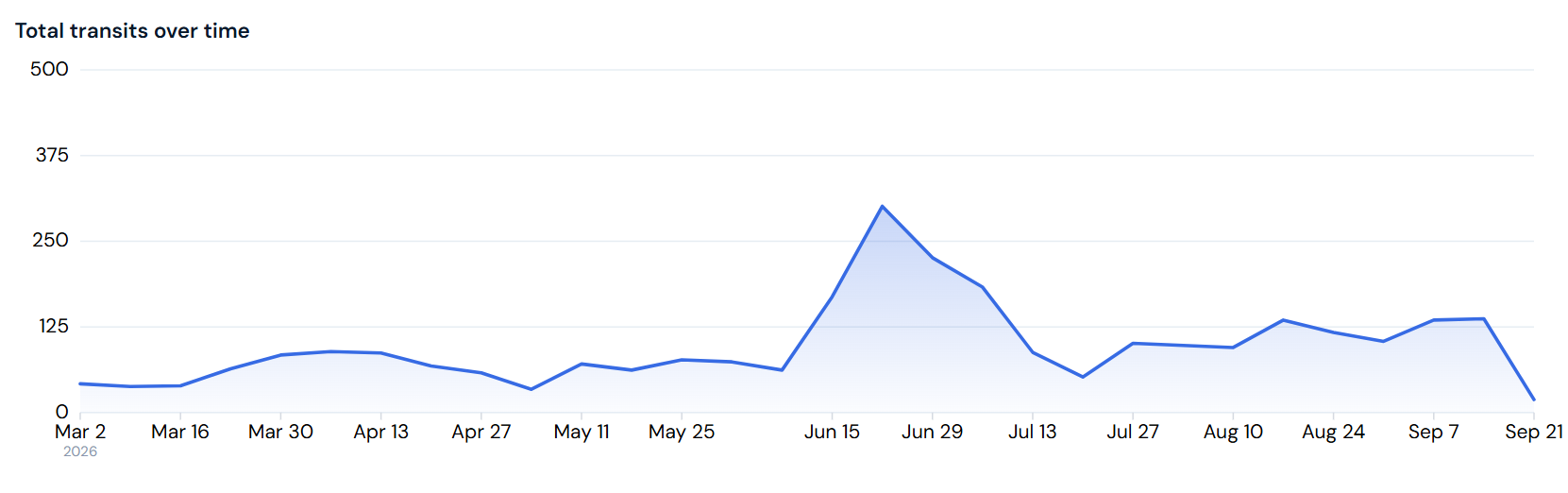
Non-Iranian-linked Hormuz transits September 14-20 (most recent complete data):
- Total transits: 117 vs 106 (September 7-13)
- Eastbound transits: 62 vs 51
- Westbound transits: 55 vs 55
- Tanker and gas carrier transits: 95 vs 82
Executive summary
September is on track to be busiest month since the conflict started, outside of the Memorandum of Understanding period. Non-Iranian-linked ships have made at least 379 voyages through Hormuz since the start of the month. Outside of the MOU period, which saw 469 transits in June, this is the most active the waterway has been since the beginning of the war.
Key takeaways
Abu Dhabi emerges as container shipping’s Hormuz shuttle operator. State-backed feeder vessels are maintaining some of the last regular container services through the Strait of Hormuz, mirroring the shuttle tanker model that has become critical to Gulf trade exports. There have been 15 containership transits so far in September, nearly double the number recorded in August. AD Ports-linked feeder vessels are behind the growth, and are all deployed on short-haul regional services linking UAE ports with Pakistan and India’s west coast. While the number of crossings is a notable rise from the quietest weeks of the conflict, it is still negligible by normal standards and major lines continue to avoid the area.
Bulk carrier movements keep up momentum. Non-Iranian-linked bulkers, defined by ownership, trade exposure or sanctions status, have continued to transit into and out of the Middle East Gulf at relatively elevated numbers. Between 7 and 13 September 18 transits were captured, with another 14 recorded from 14 to 20 September. Last week nine sailings were tracked, and this number will be revised upwards as more voyage information becomes available.
Bunker prices escalate as Hormuz crisis drags on. Ater a brief reprieve coinciding with the US-Iran peace MoU, bunker prices have headed higher again in recent months. Pricing of VLSFO and HSGO is back where it was in early April, sharply higher than pre-crisis levels.
Source: Lloyd’s List Intelligence Strait of Hormuz Transit Monitor
Security summary
Iran’s sanctions list grows from 77 to 81 vessels. The Persian Gulf Strait Authority, Tehran’s entity to oversee vessel movements through the Strait of Hormuz, has expanded its so-called ‘blacklist’ adding two crude tankers, a LPG carrier and a bulk carrier. Iran first unveiled its blacklist on August 24 with 44 vessels, warning that ships deemed non-compliant could face fines, detention or confiscation if they continued operating through Hormuz. Vessels included on the list are continuing to transit, suggesting that Iran’s effort to control shipping movements has yet to materially disrupt operations for much of the targeted fleet.
Ships transiting Hormuz continue to come under fire. A Kuwait Oil Tanker Company-managed tanker was struck by a suspected projectile while transiting the strait on 28 September. The UK Maritime Trade Operations (UKMTO) agency said it had received a delayed third-party report that a vessel was struck by a suspected unknown projectile, causing a fire on board. The vessel remained underway and any damage has not yet been disclosed.
US Central Command continues to enforce its blockade of Iranian ports, reporting that 122 merchant vessels have been redirected.
Threat level to commercial shipping remains severe. According to the Joint Maritime Information Center deliberate hostile action is highly likely.
Risk outlook
Iran says its seven-day proposal to reopen the Strait of Hormuz, relayed via Qatar and tied to a broader deal, has not been formerly rejected through mediators, complicating a diplomatic resolution for the waterway. US President Donald Trump publicly rejected the offer on Saturday. Trump has said he expects more talks with Iran this week, while Iran’s new agency stated that no new round of talks was planned.
Iran’s attacks on commercial shipping suggest a strategy calibrated less around targeting specific vessels and more around ensuring that no ship transiting the Strait of Hormuz can be considered safe. There have been over 90 attacks on commercial ships since the start of the war, and while shuttle tankers moving Middle East Gulf crude have been targeted more frequently in recent months, Iran has continued to strike vessels with no obvious connection to those operations.
We’re changing how we do the Strait of Hormuz briefs and will be publishing a brief every other Thursday, starting next week (October 8).
Join us on Thursday, October 1 for our next Week in Maritime Intelligence webinar briefing. Register here. If you want to be registered for each week of this series, please fill out this form.
* Lloyd’s List Intelligence defines a tanker as being part of the Shadow Fleet if it engages in one or more deceptive shipping practices indicating that it is involved in the facilitation of sanctioned oil cargoes from Iran, Russia or Venezuela. Or it is sanctioned for participation in sanctioned oil trades or is sanctioned for links to a company that is sanctioned for facilitating the export of sanctioned oil. Or it participates in a cargo delivery where at some point over the course of the delivery one party in the chain engages in one or more deceptive shipping practices.
Lloyd’s List defines an LPG carrier as being part of the LPG Shadow Fleet if it engages in one or more deceptive shipping practices, or if it is sanctioned by the US, UK or EU.
This briefing was compiled by the Maritime Intelligence Unit
All analysis focuses on cargo-carrying vessels over 10,000 dwt