Suez Canal
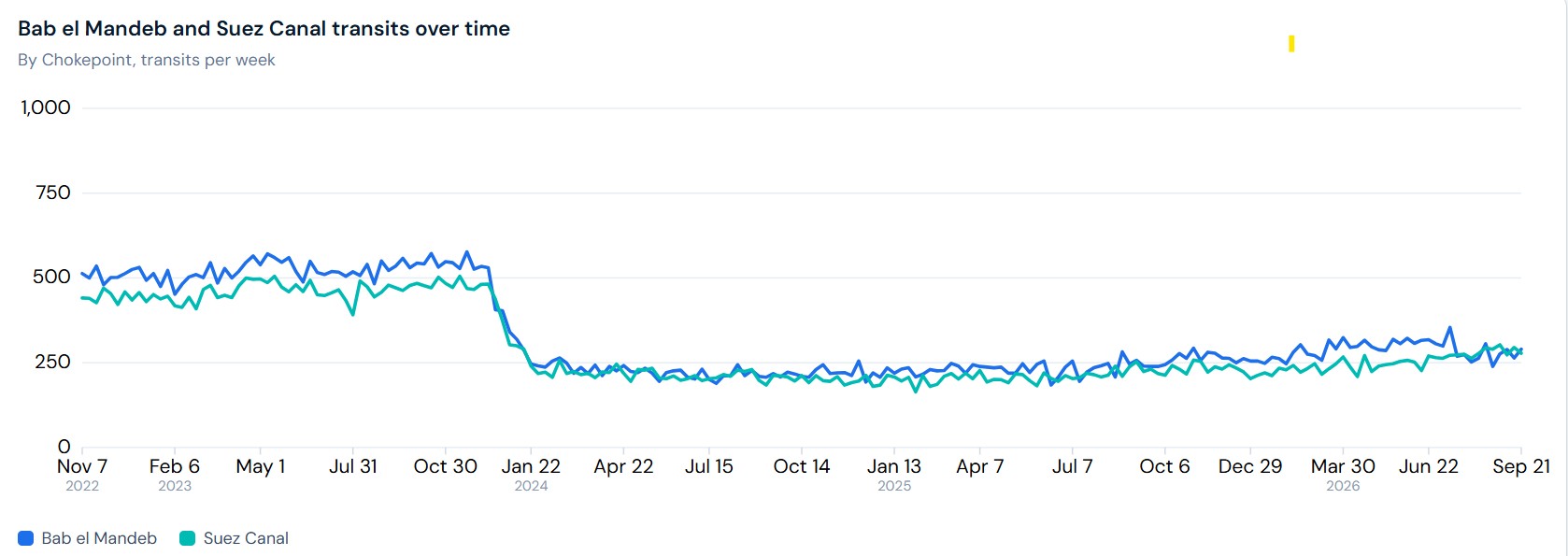
- 21 September to 27 September: 278 transits
- 14 September to 20 September: 295 transits
Bab el Mandeb
- 21 September to 27 September: 290 transits (preliminary figure)
- 14 September to 20 September: 264 transits
Executive summary
Suez traffic remains elevated. Weekly transits over the past four weeks have averaged 287 (31 August to 27 September). In the preceding four weeks this figure was 281 (3 August to 30 August). The average throughout June was 252.
Bab el Mandeb transits above pre-Middle East Gulf crisis levels, but below tanker driven peak. The preliminary weekly average over the past four weeks was 280. This figure was 316 throughout June and 257 in January.
Key takeaways
VLCCs resume Yanbu liftings as Saudi pipeline comes back online. Several tankers that have been operating ‘dark’ near Yanbu have reappeared laden. Satellite imagery confirms large crude tankers have returned to Yanbu’s terminals. The pipeline is understood to be running at reduced rates, and a return to full throughput is still expected to take several weeks.
Crude traffic through Suez slows. Rerouting of Saudi oil after the implementation of the Houthis’ naval blockade boosted tanker transits through the Red Sea’s northern chokepoint. Weekly crude transits averaged 53 (6.7m dwt) between January and February. From 20 July, when the ban took place, to 13 September, the week that an attack halted crude exports from Yanbu, the average was 67 transits (9.4m dwt). Last week, 53 transits (6.7m dwt) passed through the Suez Canal, the lowest in tonnage terms since mid-July.
Source: Lloyd’s List Intelligence Red Sea Transit Monitor
Security summary
EU seeks more warships for Aspides as ship escort requests surge. Commercial vessels are now effectively queuing for escorts because Operation Aspides lacks sufficient warships to meet demand, said EU foreign policy chief Kaja Kallas. Preliminary numbers show 290 vessels transited the Bab el Mandeb last week, up from 264 the week prior.
Somali pirates abandon hijacked tanker after recent recoveries of other vessels. A tanker held for nearly five months has been abandoned, the latest sign that Puntland security forces are intensifying efforts to dismantle pirate groups. On 29 September, Puntland authorities announced the recovery other another hijacked tanker which had been held since April, and that operation followed the release of a third ship only days earlier.
Risk outlook
Owners and operators continue to implement plans for Red Sea return. Ships that have avoided the waterway for several years are increasingly being tracked sailing through the international shipping waterway. While the Houthis’ blockade on Saudi Arabia has dampened prospects for traffic growth through the Bab el Mandeb, their threats have not derailed the increasingly rapid return to the Red Sea.
Recent releases of ships hijacked by Somali pirates marks the most significant disruption of pirate networks since attacks began increasing across the Gulf of Aden and Somali Basin. The recoveries mean five of the six vessels known to have been held by Somali pirates as recently as late August have now been freed. The operations have underlined the ongoing risks facing merchant shipping. Five crew members were killed on board one of the vessels, marking the first fatalities at the hands of Somali pirates in more than a decade.
The renewed tensions in the Red Sea have had a limited impact on the wider shipping industry, with the market adjusting accordingly. As such, the Red Sea Brief will now be published every other week unless there is a change in circumstances.
If you missed The Week in Maritime Intelligence webinar, register to watch the briefing on demand here
This brief was compiled by the Maritime Intelligence Unit
All analysis focuses on cargo-carrying vessels over 10,000 dwt