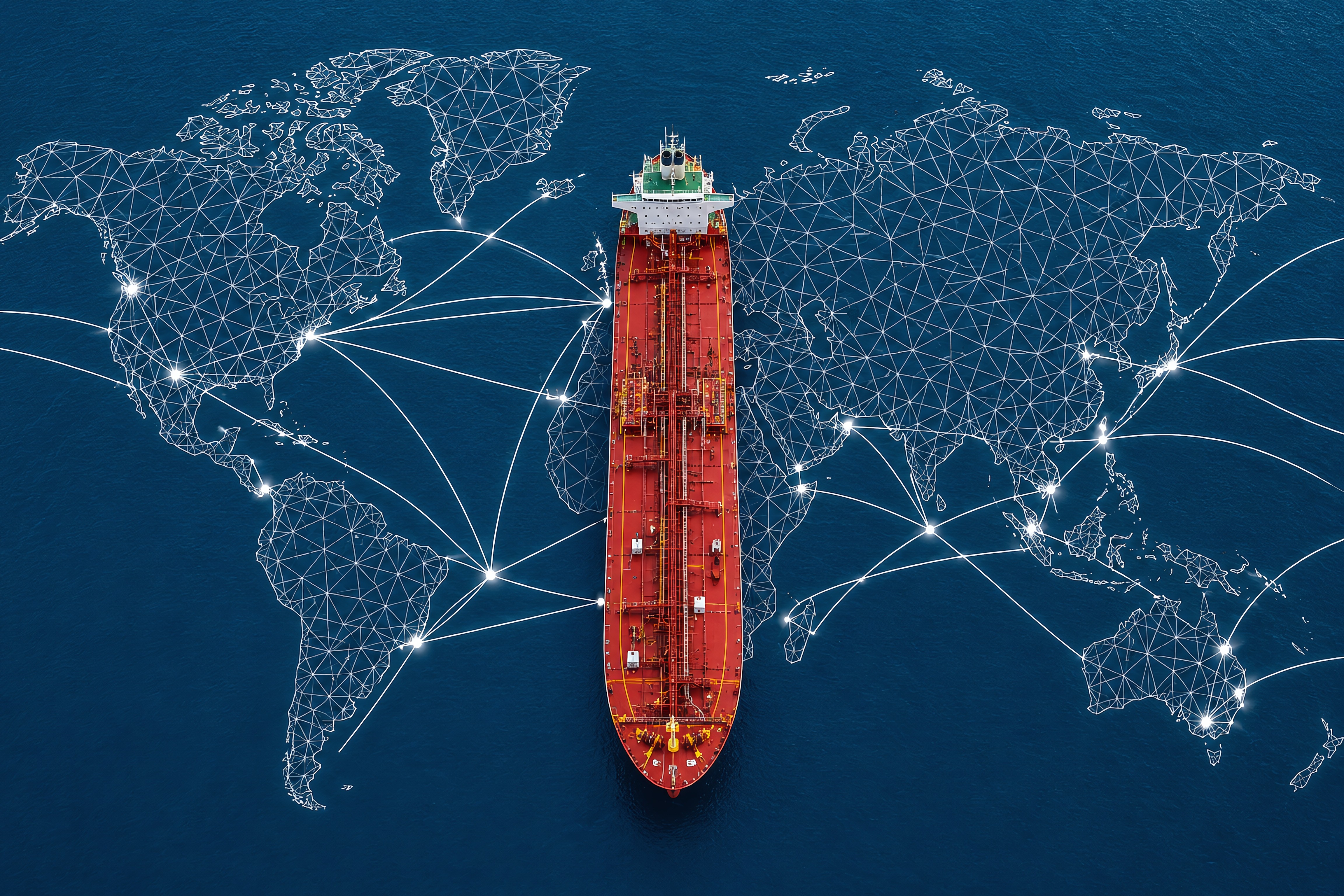
Picture this scenario: A tanker is two-weeks out from a port. No enquiry has reached a supplier and there may be nothing obvious in the market to suggest an opportunity is developing – but its voyage may already be telling a different story.
Its destination is becoming clearer, the expected arrival window is narrowing, and its trading history provides additional context, while congestion at the destination help indicate how the port call may develop.
Sound familiar?
For bunker traders and ship services teams, these connected signals can reveal an opportunity before a conventional sales trigger appears.
The same dynamic can be seen across maritime markets:
- A bulker changes its expected destination, shifting its next commercial opportunity to another region.
- A vessel approaching a congested port faces delays that may affect its arrival and operational requirements.
- A cluster of vessels begins moving along a particular trade route, providing an early indication of changing activity before it appears in broader market data.
These events may not make headlines, but commercially, they matter.
From tracking vessels to knowing what comes next
For decades, vessel tracking has primarily answered one question: Where is the vessel?
For commercial teams, the more valuable questions are increasingly: Where is it going? When will it arrive? And what could that mean for our business?
A vessel’s destination, voyage pattern, ETA, ETB, ETD and operational activity can reveal what is likely to happen next. When combined with port conditions, vessel characteristics and trading behaviour, these signals become a source of forward-looking commercial intelligence.
This is particularly valuable for commercial teams whose opportunities are tied directly to physical vessel movements.
For bunker suppliers, movement data can indicate where demand may emerge. For commodity and freight traders, it can provide context around developing trade flows. For maritime service providers, it can highlight vessels likely to require support at a particular port or within a specific timeframe.
The underlying data is not new, what is changing is how commercial teams use it.
The challenge is no longer visibility
The maritime industry has access to more vessel data than ever before, and the challenge is knowing what deserves attention.
Commercial teams cannot manually assess every vessel entering a region, every ETA change or every alteration to a voyage plan. More data, and even more alerts, does not automatically lead to better decisions - context does.
A change in course is not automatically an opportunity. A delayed vessel is not always commercially significant. The value comes from understanding which movements matter, why they matter and what action they could require.
That means connecting vessel movements with predicted voyage intelligence, scheduling information, port conditions, previous STS pairings, and trading insights to distinguish meaningful developments from background activity.
For commercial teams, this shifts the workflow from monitoring everything to prioritising what matters.
Switching to proactive decision making
Identifying the vessel movements that matter not only helps subdue the noise but, more critically, gives commercial teams the time to be proactive and create an effective strategy.
Consider our initial example of the tanker approaching the port. Once it is alongside, the opportunity may already be visible to the wider market, suppliers may have made contact, and the customer’s options may already be established.
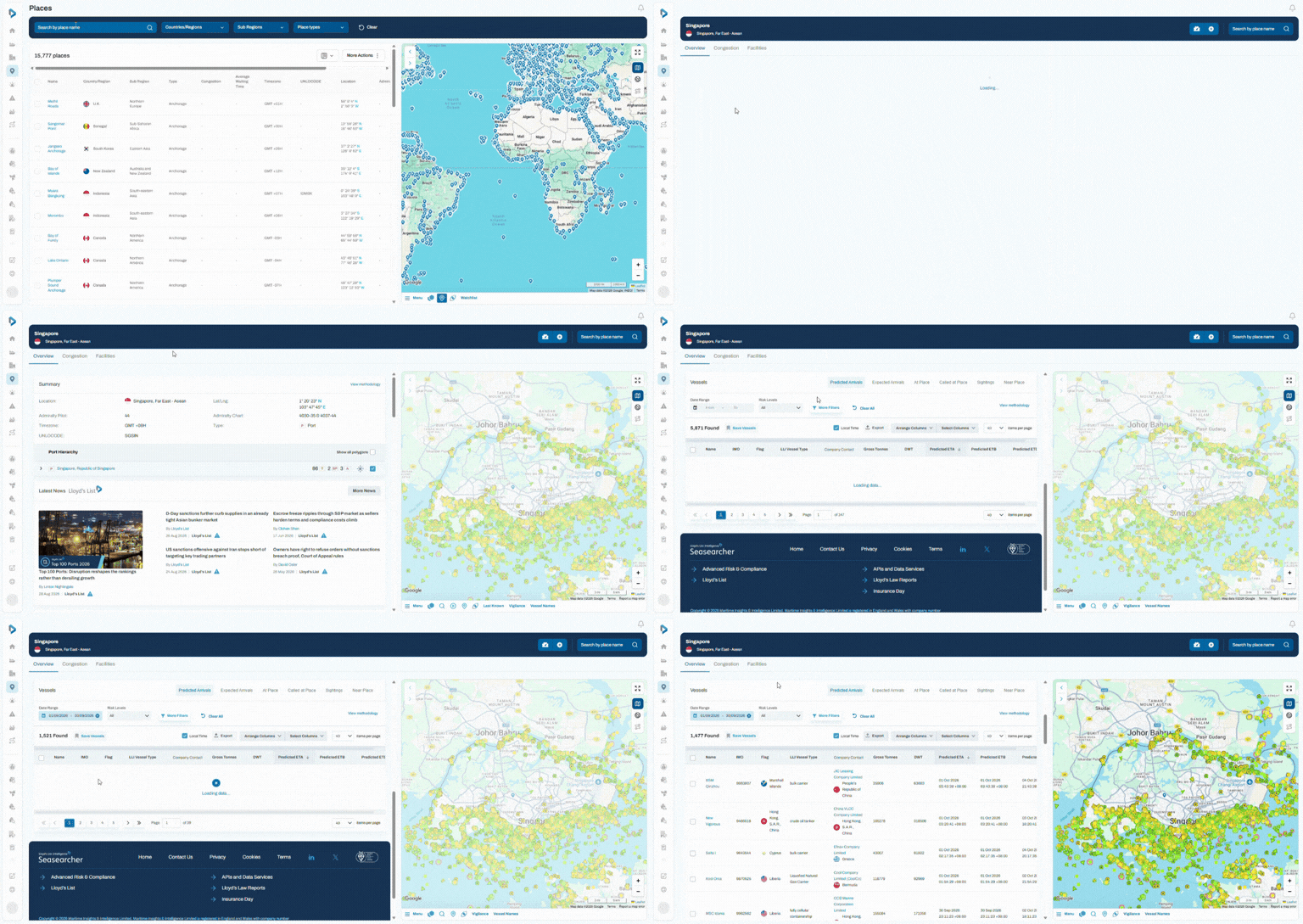
Earlier visibility gives a commercial team more time to investigate the vessel, assess its likely requirements, understand local supply conditions and decide whether to engage.
The same advantage applies to trading decisions, customer engagement and supply planning. Teams can evaluate an emerging situation before it becomes obvious, rather than reacting once the commercial window has started to close.
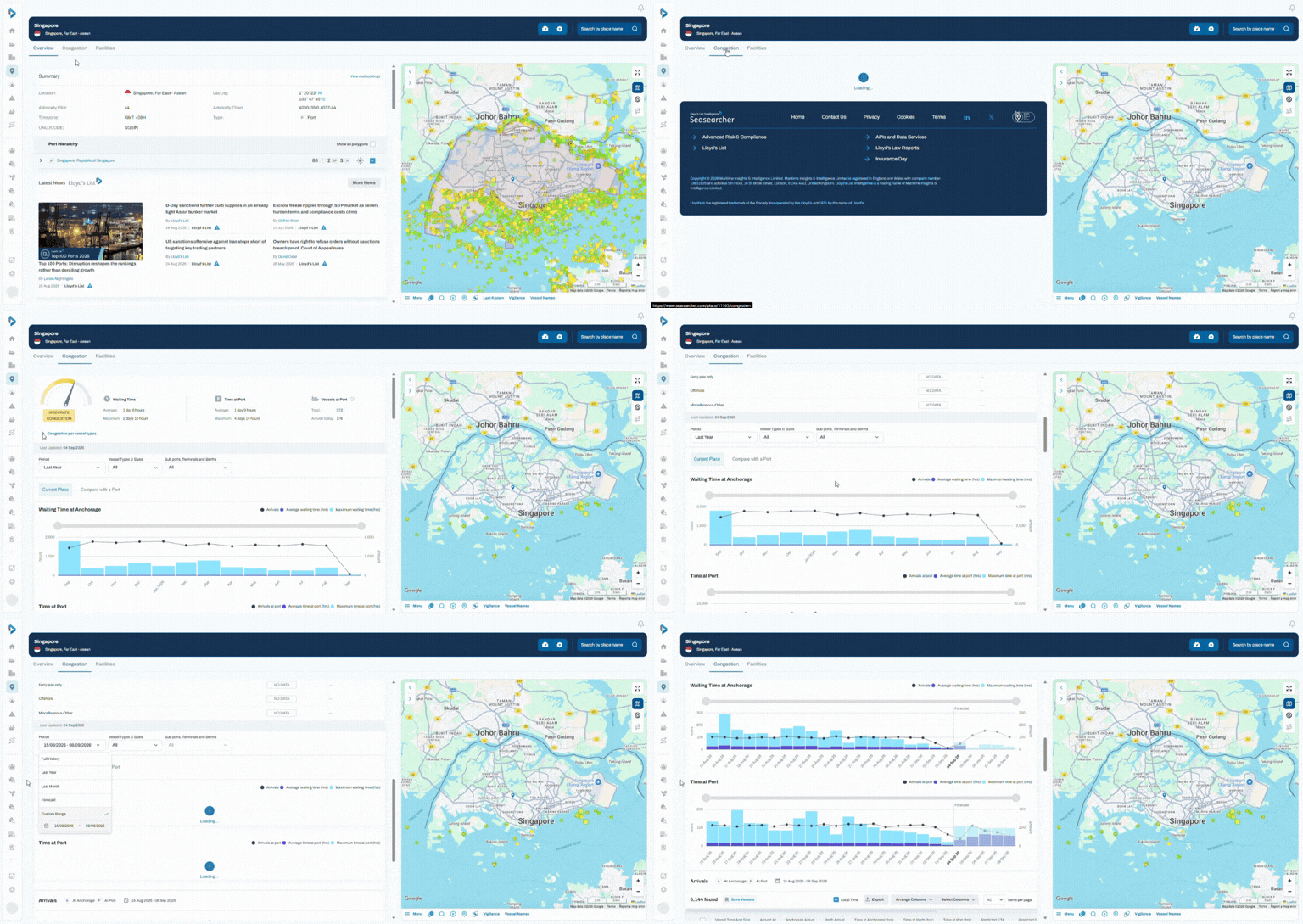
The value of intelligence is therefore not simply whether it is accurate – it is whether it arrives early enough to influence a decision.
Turning fleet movements into commercial intelligence
The maritime industry has progressed from basic vessel visibility to increasingly sophisticated intelligence around voyages, destinations, ports and trading activity.
The next step is to use that intelligence proactively and start assessing which vessels are likely to become relevant to you next.
This is where Seasearcher Fleet Awareness changes the commercial workflow with forward-looking intelligence. By bringing together predicted voyage information, vessel activity, scheduling, port congestion, global STS pairings and trading insights in one view, it helps trading and supply teams identify relevant movements and events earlier in order to quickly focus their attention on where commercial opportunities are most likely to emerge.
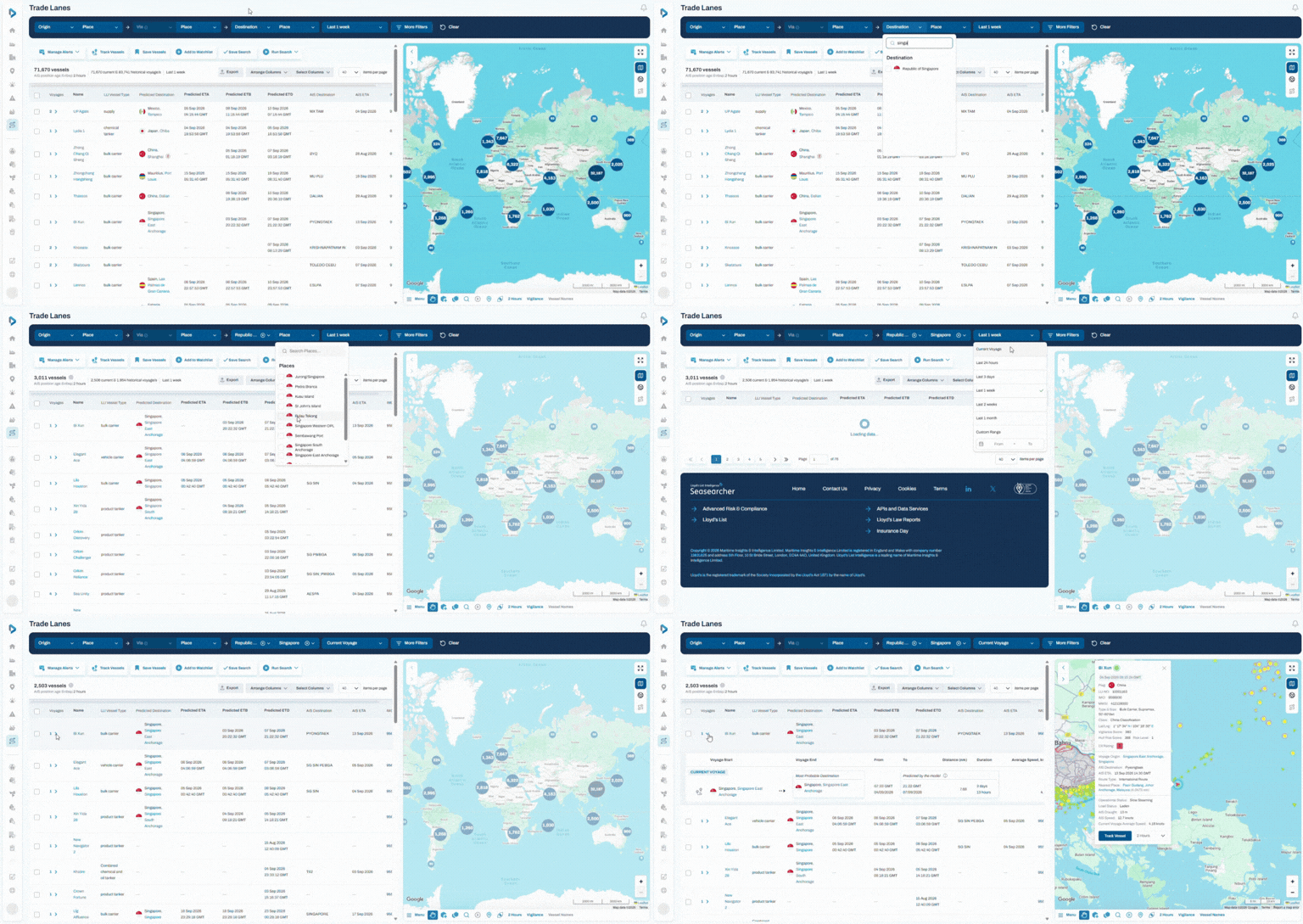
When your team can identify what vessel movements mean, you can act before the rest of the market does, driving business efficiencies and commercial growth.
Get a clearer view of vessel-led opportunity with Seasearcher Fleet Awareness.