Introduction
OFAC’s latest advisory on Iranian oil sanctions revealed an alarming surge in deceptive shipping practices—from multi-leg STS transfers to AIS spoofing. Confronted with ever-evolving risks, compliance teams need more than static lists: they require a proactive, data-driven solution. Enter Lloyd’s List Intelligence’s Seasearcher platform, which combines AI-powered anomaly detection, rich maritime datasets, and risk-based workflows to transform your sanctions compliance posture.
That’s exactly what happened when Seasearcher pinpointed a seemingly routine LPG shipment that, on closer inspection, was anything but.
The Challenge: Invisible Red Flags
In April 2023, charterers believed the tanker Sea Opera (IMO: 9000883; Flag: Cameroon) had loaded propane in Sohar, Oman, on April 17. The bill of lading, issued by Babylon Marine Services LLC, showed all the right paperwork—and yet something didn’t add up.
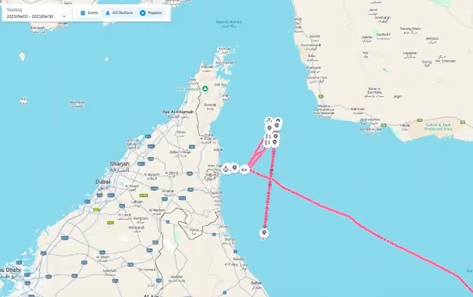
AIS Spoofing Masked 22 Days of Movement
Between April 8 and 30, the vessel’s transponder repeatedly went dark or broadcast false positions. On paper, Sea Opera never called Oman during that window—despite the BL’s “shipped on board” date. According to Tomer Raanan, Senior Maritime Reporter, Lloyd’s List, these AIS messages were manipulated.

The bill of lading indicates the vessel Sea Opera loaded propane at Sohar, Oman, on April 17, 2023, with the certificate of origin issued by Babylon Marine Services LLC, relating to the same BL.
Shell-Company Ownership Obscured Beneficiaries
A quick OSINT search reveals that Starling Denver Trading Limited (shipper) and Babylon Marine Services LLC (issued certificate of origin) have minimal web presence. Layered SPVs in high-risk jurisdictions masked the true owners and made a standard due diligence review practically impossible

Manual Reviews Consumed 30% of Screening Capacity
With so many red flags buried in noisy AIS and documentation, compliance teams spent weeks chasing anomalies—time they could not afford as enforcement actions ramped up.
The Solution: Seasearcher’s AI-Driven Insights
When Sea Opera’s voyage data first arrived, Seasearcher immediately activated its real-time anomaly detection model. Here’s how each capability played a role:
- Real-Time Anomaly Detection Spots AIS gaps, spoof events, and false-flag changes.
Risk-Based Triggers
- Automatically flags STS transfers in high-risk zones (Arabian Gulf, Malacca).
- Integrated Due Diligence combining vessel data, cargo-flow intelligence and historical ownership.
- Workflow Automation & Integration APIs, data feeds, and Snowflake connectors for seamless IT integration.
The Impact: Immediate Wins
- $20 M Shipment Blocked: Sea Opera’s spoof was caught before cargo release.
- 40% Reduction in Manual Hours: Automated alerts cut review backlogs by nearly half.
- Stronger Audit Trails: Data feeds and dashboards build a defensible compliance record.
Curious to see the full case study?
Book a consultation today to learn how Seasearcher transforms maritime sanctions compliance.
Request a consultation
.png)