2026.03.17
Since Russia’s invasion of Ukraine in 2022, there has been a steadfast set of sanctions regulations implemented by Western governments relating to Russian crude and petroleum products. This has provided traders with clear rules regarding the trade of Russian oil.
However, geopolitical change can be swift and just a few weeks into the current conflict in the Gulf, Donald Trump’s administration has issued a temporary sanctions waiver on Russian seaborne crude and petroleum products.
The news demonstrated an effort to limit the economic fallout from the ongoing US‑Israel conflict with Iran, but what are the details of the waiver and what does this mean for traders?
The 30-day license permits buyers to purchase Russian-origin products already loaded on tankers, effectively unlocking tens of millions of barrels that had been stranded by sanctions restrictions. The move is designed to stabilise global energy markets as oil prices surged above $100 a barrel amid geopolitical tensions affecting supply routes.
For commodity traders, this decision creates a sudden reopening of opportunities in a market that has been constrained since 2022.
However, whilst the waiver may free up cargoes, it does not remove the complexity of trading Russian oil.
Why Cargo Transparency Is Now Critical for Traders
For commodity traders considering Russian trade again, the central challenge is no longer simply price or freight economics – It is cargo provenance.
Banks, insurers, and counterparties increasingly require proof that cargoes:
Without credible evidence, financing and insurance can quickly fall apart
In a fast-moving physical market, manual due diligence is often too slow.
How to enable trade safely
Sanctions are increasingly becoming dynamic policy tools rather than static restrictions. They can tighten or loosen quickly in response to geopolitical events, leaving traders scrambling to reassess risk attached to opportunity.
Companies that can rapidly validate cargoes will be best positioned to capitalise on market dislocations – enter, Seasearcher’s Cargo Risk intelligence.
Rather than focusing solely on vessel sanctions lists, our Cargo Risk solution analyses cargo movement patterns across voyages to provide traders with a clearer view of what’s moving on the water:
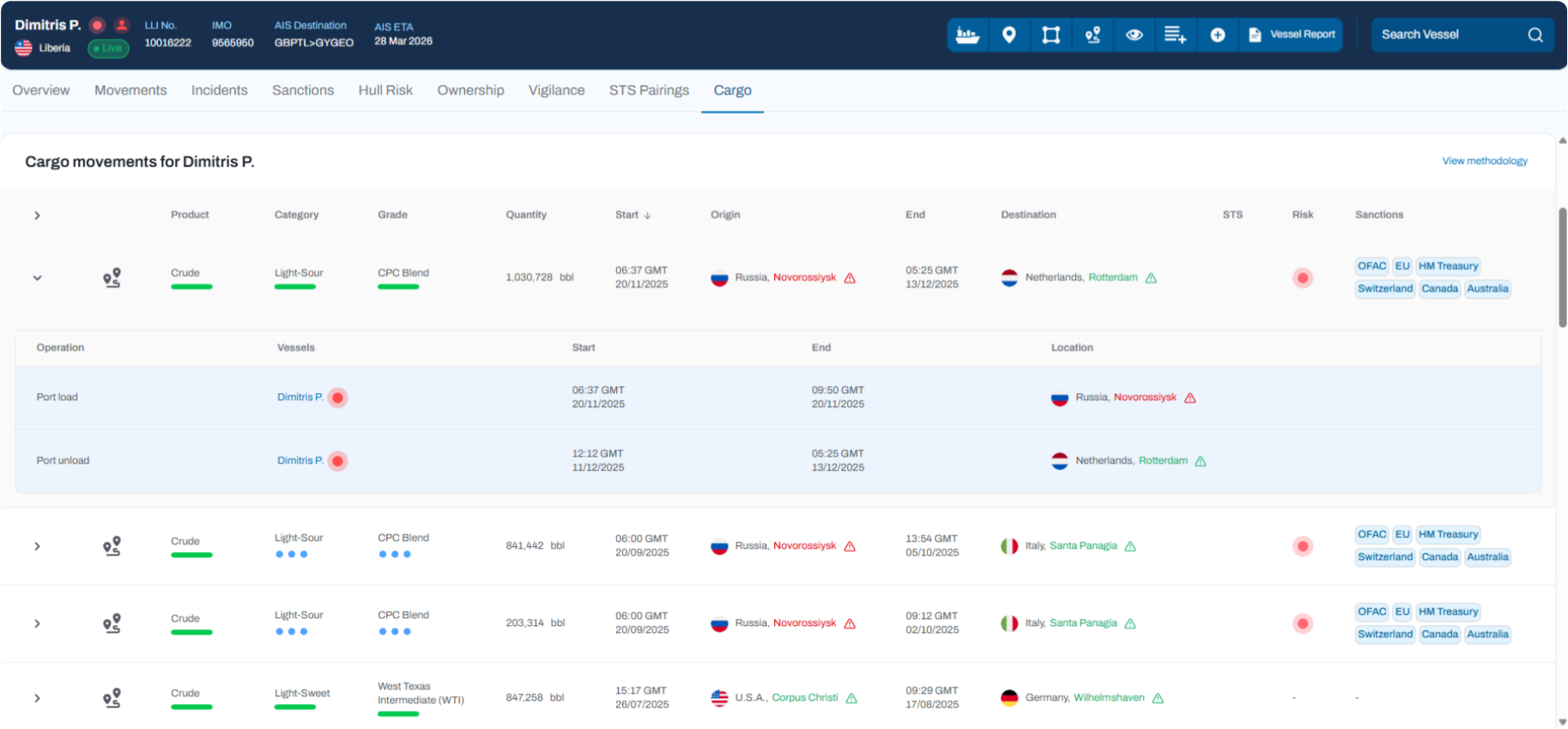
Cargo provenance tracking
Traders can analyse the historical movement of cargoes across vessels and voyages, helping verify whether oil originated from compliant sources.
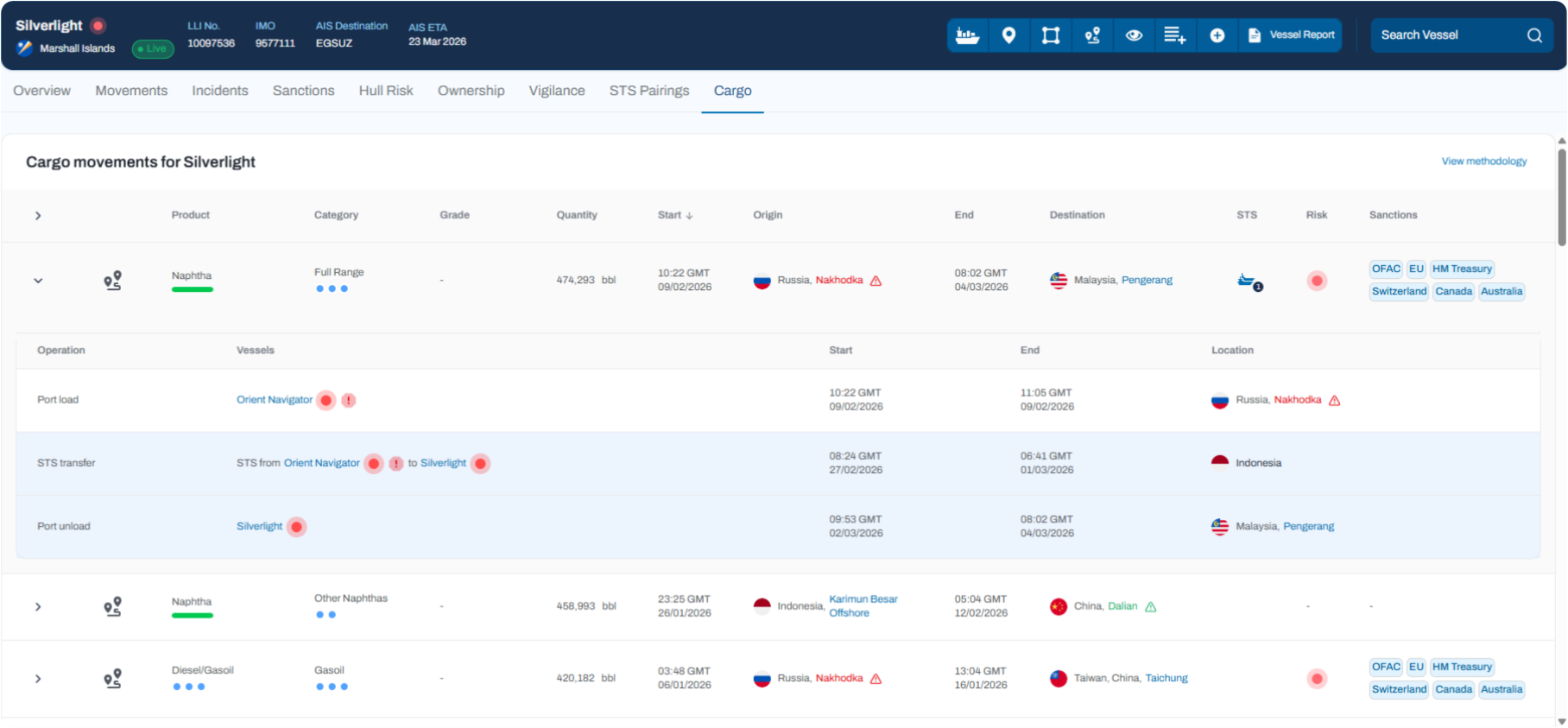
Ship-to-ship transfer detection
Cargo Risk identifies when tankers engage in STS operations that could obscure the origin or ownership of a cargo.
Behavioural vessel risk indicators
The platform highlights potential red flags such as:
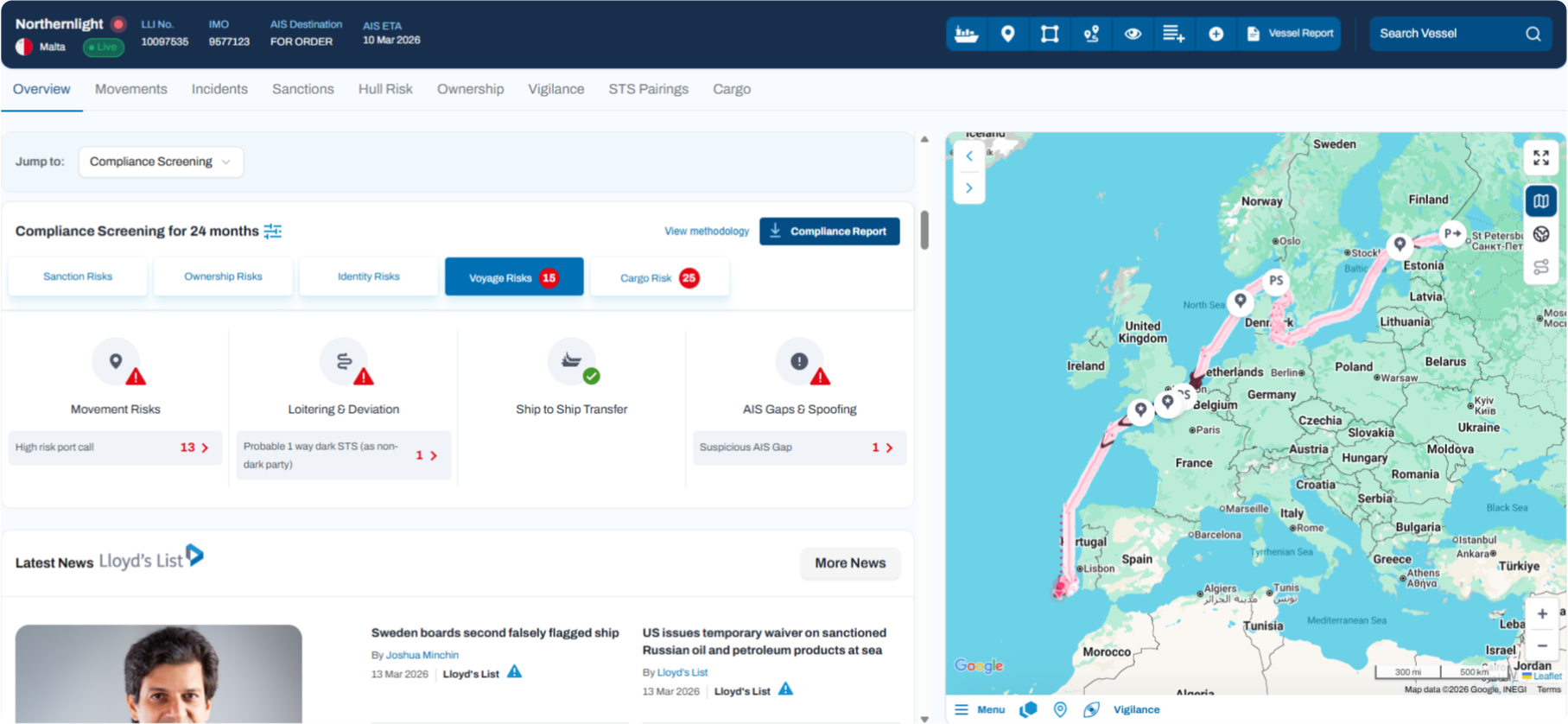
Instead of piecing together data across multiple maritime intelligence platforms, traders can perform structured risk checks quickly – allowing deals to proceed with greater confidence.
Seasearcher Cargo Risk does more than protect against sanctions breaches – it enables legitimate trade to continue even in politically volatile markets.