The EU’s upcoming to plan to replace the price cap framework with a maritime services ban on Russian-lifted crude products would signify a marked alteration to global oil trade flows – and a new headache for Compliance managers.
At time of writing, the plan – submitted as part of the EU’s 20th sanctions package against Russia – still requires coordination with, and subsequent approval from, the G7 before it can be implemented.
By cutting off access to EU and UK insurance and reinsurance markets, the ban would remove all European-owned and -insured vessels from being able to legally lift Russian crude oil – meaning the remaining 20% of transits by carried out by these vessels will effectively be moved on to the shadow fleet*.
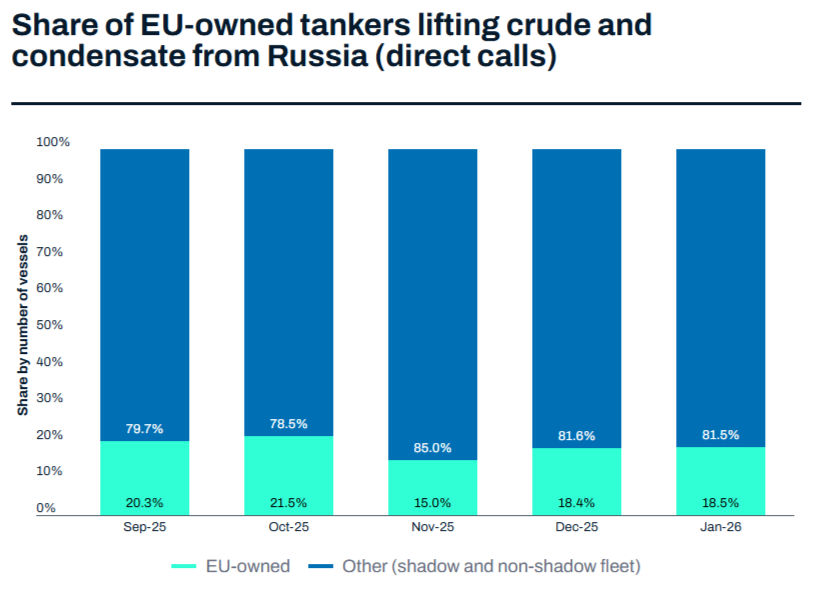
Source: Lloyd's List analysis of Vortexa cargo data, Lloyd’s List Intelligence / Seasearcher
* Only vessels directly calling in Russia
** Figures subject to change
The ‘What If’ for Compliance Managers?
Shipowners/Operators/Charterers
Heightened compliance pressures from vessel re-flagging, AIS manipulation and illicit STS transfers may become more prevalent, and the failure to detect and manage these risks carries serious legal and reputational consequences.
Enhanced vessel and cargo-level monitoring are essential to maintaining lawful operations and protecting access to insurance and financing.
Commodities Trading & Refining
Shifting Russian trade flows introduce greater uncertainty around cargo source, counterparties and delivery routes. The increased use of obfuscation tactics – such as disguised cargo origins and transfers in high-risk zones – raises the risk of inadvertently breaching sanctions despite formal compliance frameworks remaining in place.
Robust cargo risk intelligence is critical to verifying origin, monitoring mid-voyage events and ensuring trades remain compliant across increasingly complex and opaque supply chains.
Trade Finance
Documentation alone may no longer provide sufficient assurance when cargo movements involve dark fleet vessels, AIS gaps, and sanctioned STS transfers.
Financiers must strengthen transaction monitoring and due diligence processes with independent cargo and voyage intelligence to mitigate regulatory, financial and reputational risk, while continuing to support legitimate trade flows.
Insurance
The exclusion of EU and UK insurers from Russian crude trades significantly concentrates risk within non-Western and opaque insurance structures. Insurers and reinsurers that remain active in global energy markets must contend with increased uncertainty around vessel behaviour, cargo origin and compliance with multiple sanctions regimes.
Enhanced cargo risk screening and continuous monitoring are essential to accurately assess exposure, avoid inadvertent coverage of sanctioned activity, and protect underwriting integrity.
Removing the price cap doesn’t mean sanctions disappear – compliance obligations remain, with newly heightened risk indicators to be aware of:
The cost of failure to manage these risks can encompass reputational damage, fines, and legal exposure for all counterparties in the supply chain – which is where we step in to support you...
Monitoring Dark Fleet Cargo Movements
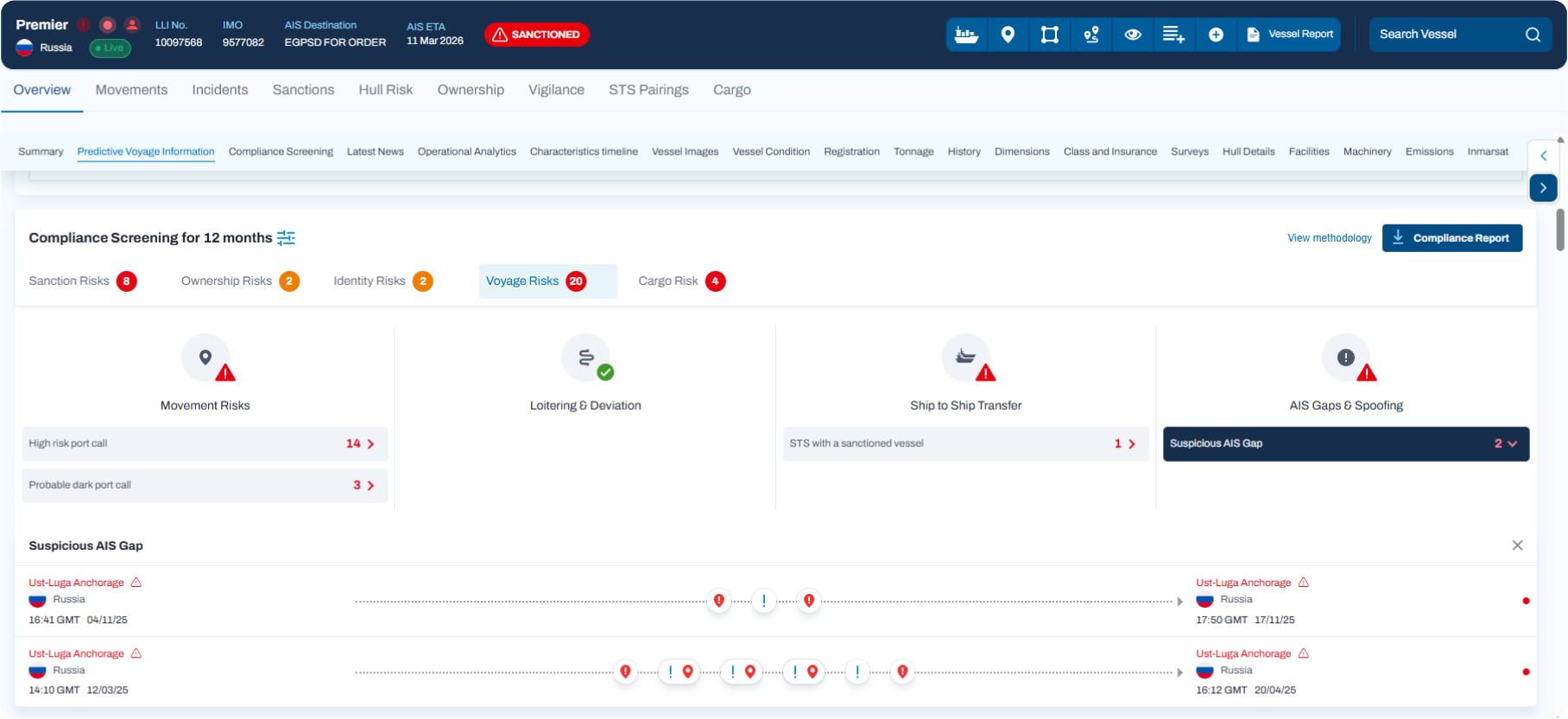
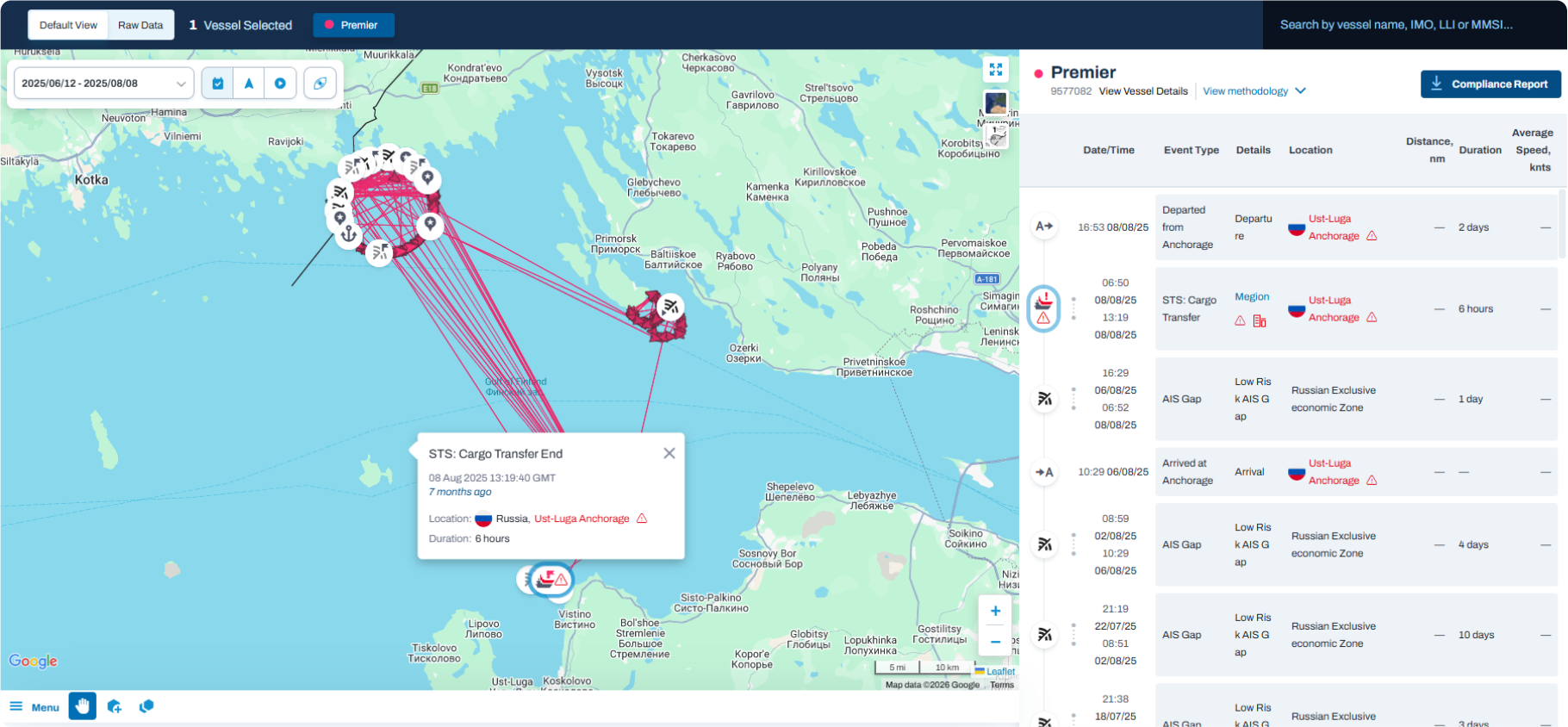
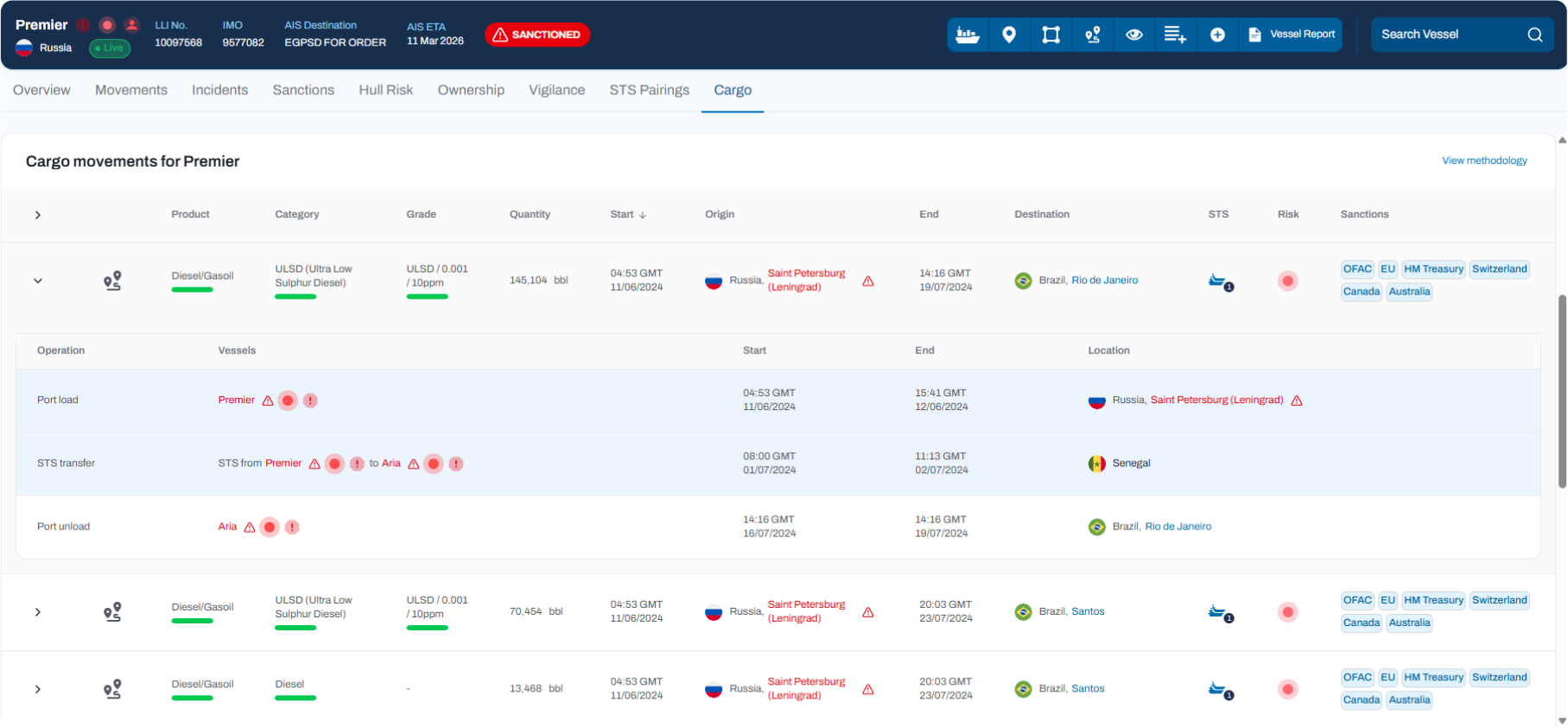
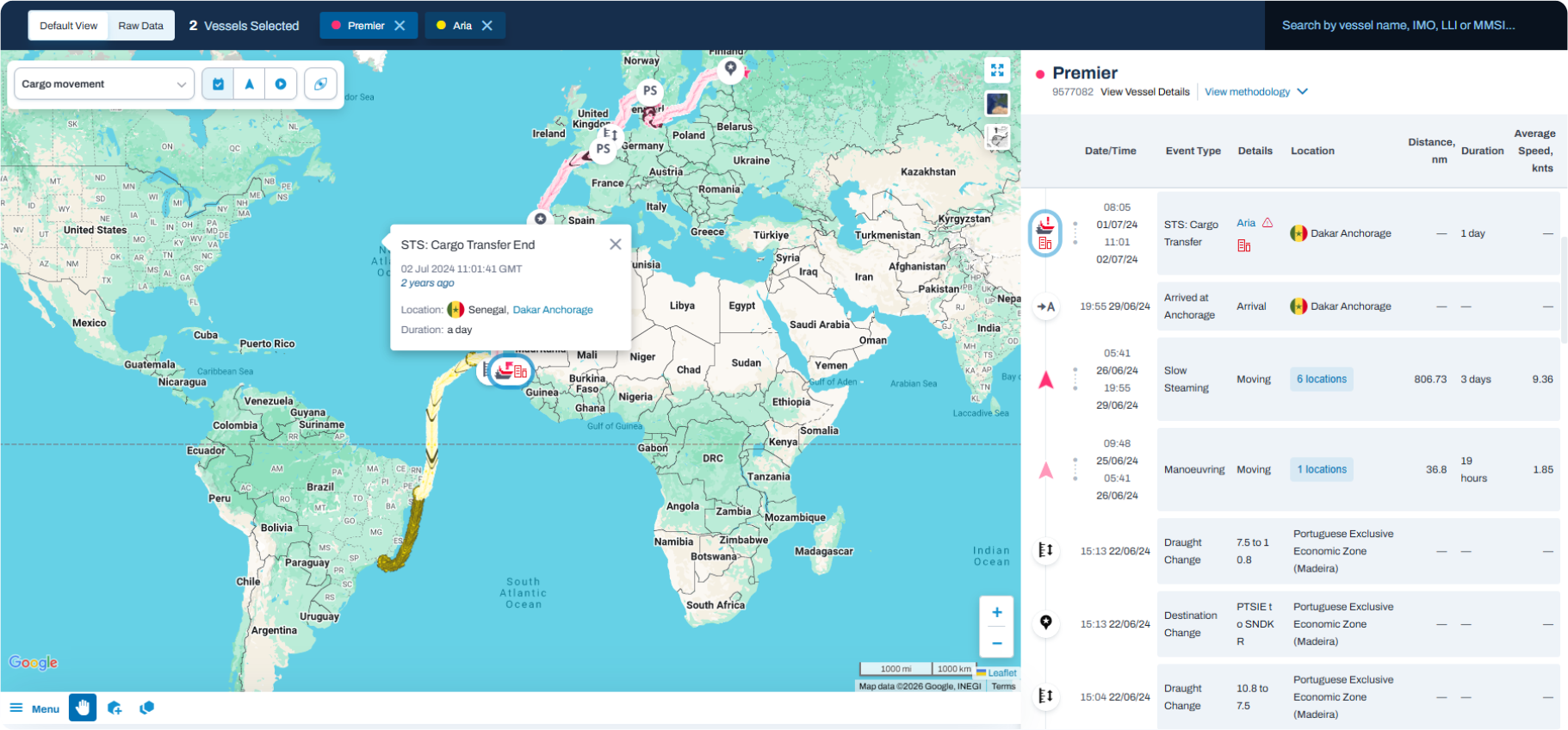
The below example demonstrates how the VLCC vessel Premier (IMO 9577082), identified as part of the Dark Fleet, continues to flout regulations by being complicit in the lifting and delivery of sanctioned Russian cargoes via a combination of obfuscation tactics – including AIS gaps, AIS spoofing and illicit STS transfers – informed by Lloyd’s List Intelligence’s proprietary data models.
AIS Gaps, Spoofing & STS Activity
A multitude of manipulation tactics identified around Ust-Luga Anchorage, most notably AIS spoofing, which is characterised by impossible geometric patterns.
Tracking Illicit Cargo Movement Activity
Our cargo risk solution confirmed a cargo of Ultra Low Sulphur Diesel (ULSD) lifted at St. Petersburg, by the Premier, followed by sanctioned STS Transfer at Dakar Anchorage to the vessel Aria (IMO 9397559), culminating in delivery at the port of Santos, Brazil.
Why Cargo Risk Intelligence Matters
Enhanced Vessel Screening
Screen & track oil, chemical, LNG and LPG cargo flows, ensuring complete oversight, on top of accessing the exclusive Lloyd’s List Dark Fleet Watchlist.
Improved Efficiency
Automated alerts for high-risk vessels minimise manual data analysis, streamlining operations
Regulatory Compliance
Ensure alignment with 7 sanctions regimes (OFAC, HM Treasury, EU, etc.) and 7 high-risk regions
This is how we can help
Seasearcher Cargo Risk empowers your maritime intelligence with comprehensive cargo risk insights:
Cargo Risk Ratings: Integrated risk detection with standardised vessel risk scores for seamless decision-making.
Actionable Cargo Insights: Contextual data on cargo details, origin, and voyage events including STS transfers.
Enhanced Vessel Screening: Track oil, chemical, LNG and LPG cargo flows with complete oversight.
Proactive Monitoring: Continuous monitoring of cargo movements via alerts, including mid-voyage ship-to-ship transfers.
Regulatory Compliance: Ensures alignment with 7 sanctions regimes (OFAC, HM Treasury, EU, etc.) with over 1,000 products / grades of wet cargo to determine risk.
Ensure the ‘What-If’ doesn’t become a reality, get started with a demo today