Most compliance decisions are made in the gap between what is known and what is officially sanctioned. A vessel can appear clean today passing sanctions screening with no immediate red flags only to be designated weeks later.
That gap is where risk lives.
On April 24, 2026, the U.S. Office of Foreign Assets Control (OFAC) sanctioned 19 oil and LPG carriers linked to illicit trade. But these vessels weren’t unknown risks. Long before their designation, each had already been flagged as high risk within Seasearcher Advanced Compliance, with multiple red-rated indicators pointing to suspicious activity well in advance of enforcement action.
Why Screening Sanctions Lists Alone Is No Longer Enough
If you are relying on traditional screening against published sanctions lists, you’re only going to capture a fragment of the risk picture. Vessels can engage in deceptive practices that allow them to operate under the radar—until they are formally sanctioned. This lag creates significant exposure for compliance teams relying solely on sanctions lists.
The good news is that the evidence is already there, all you need to do is connect the dots.
Time and again, risk emerges through repeated signals across behaviour, identity and trade activity; by combining these indicators you can identify patterns of deception and address the compliance gap.
Fortunately, it doesn’t need to be complicated. We automate this process tracking and pinpointing:
Every vessel was already flagged high risk
By evaluating the OFAC sanctions update, we were quickly able to see that every vessel sanctioned was already flagged as high risk within Seasearcher.
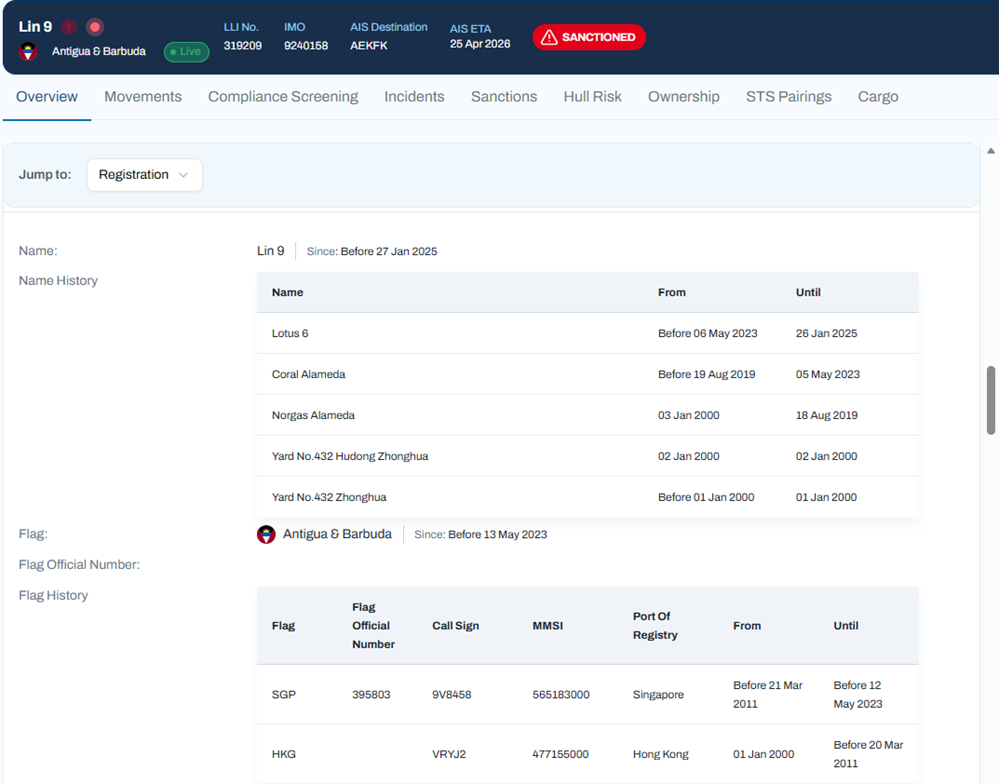
Below, we’ve spotlighted the Lin 9 vessel to demonstrate the risk indicators we identified before it made the sanctions list.
LIN 9 (IMO9240158): A case study in pre-sanction risk indicators
The LPG carrier LIN 9 exemplifies how behavioural analytics can detect risk signals well before formal sanctions. Cargo risk exposure was evident from May 2024—almost two years before OFAC’s designation under the Iran programme on April 24, 2026.
Five key indicators:
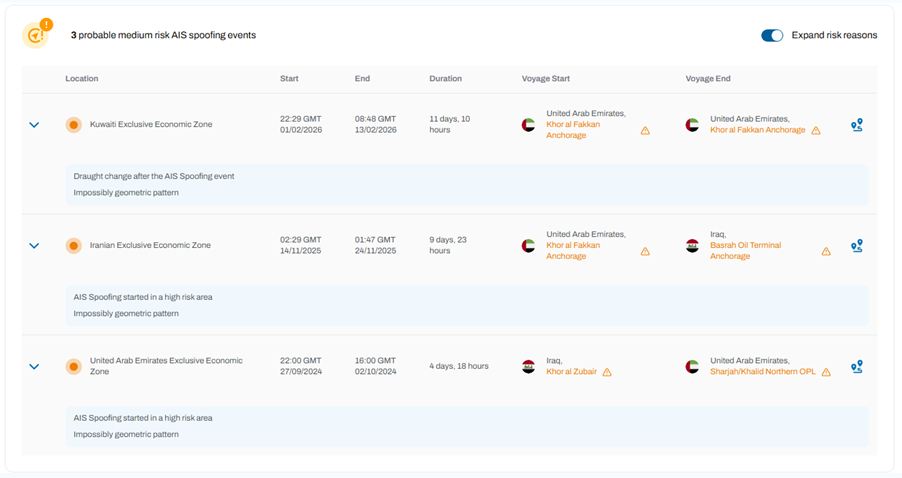
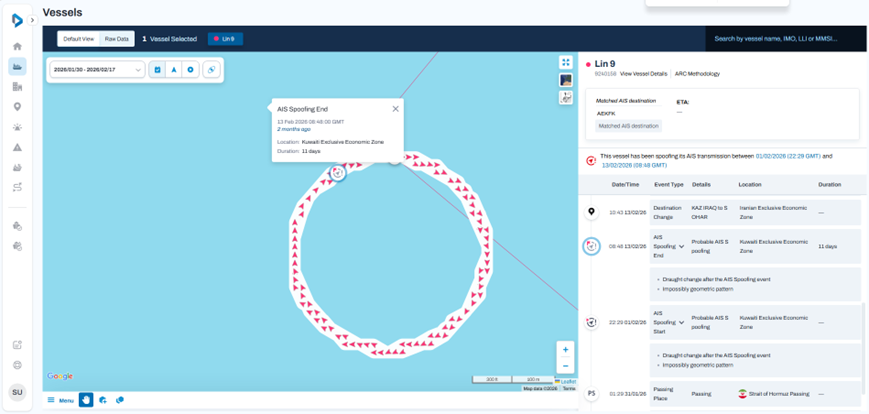
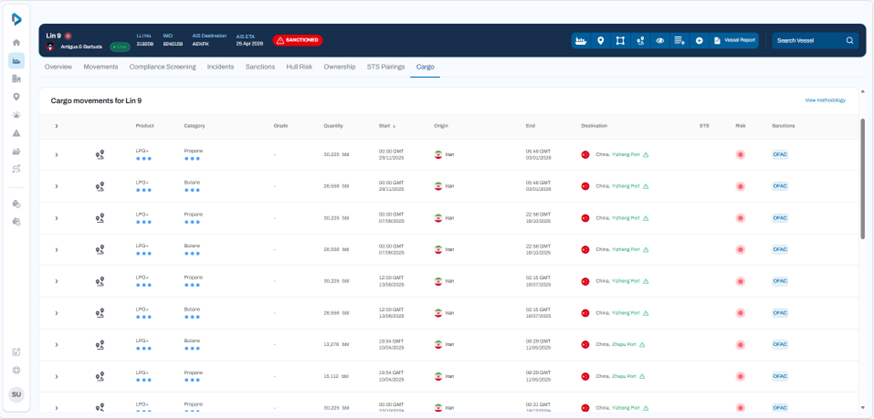
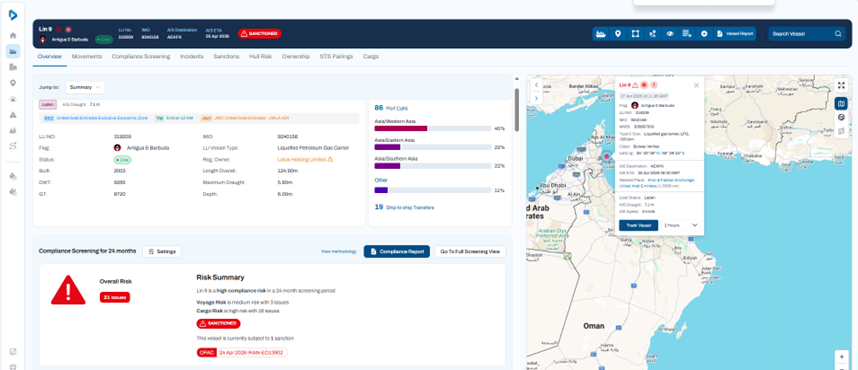
While LIN 9 is also listed on Lloyd’s List’s LPG Shadow Fleet* watchlist—a curated list that supports ongoing monitoring—its risk was first identified through the comprehensive indicators captured by Seasearcher Advanced Compliance.
Those sustained pattern of risk signals demonstrates that sanctions designation confirms, rather than initiates, risk exposure.
Activate the gold standard in maritime compliance
Sanctions evasion tactics are evolving rapidly. Waiting for formal sanctions lists puts your compliance programme at risk. Seasearcher Advanced Compliance offers a comprehensive, intelligence-driven solution that covers all aspects of maritime sanctions and compliance risk, combining:
Integrating Seasearcher Advanced Compliance into your workflows provides the proactive, comprehensive intelligence needed to stay ahead of risk.
Safeguard your operations against emerging maritime sanctions risks
*Lloyd’s List defines a tanker as being part of the Shadow Fleet if it engages in one or more deceptive shipping practices indicating that it is involved in the facilitation of sanctioned oil cargoes from Iran, Russia or Venezuela. Or it is sanctioned for participation in sanctioned oil trades or is sanctioned for links to a company that is sanctioned for facilitating the export of sanctioned oil. Or it participates in a cargo delivery where at some point over the course of the delivery one party in the chain engages in one or more deceptive shipping practices.
**Lloyd’s List defines an LPG carrier as being part of the LPG Shadow Fleet if it engages in one or more deceptive shipping practices, or if it is sanctioned by the US, UK or EU.